
Page yield, page coverage, operating conditions, and cartridge type all interact to determine how far your toner actually goes. Understanding these factors helps you pick the right cartridge, plan replacement schedules, and control printing costs without unpleasant surprises.
This article breaks down yield ratings, standard versus high-yield cartridges, cost-per-page math, the ISO testing standards behind the numbers, and the real-world variables that push actual results above or below the rating on the box.
Key Takeaways
- Page yield is an approximate, standardized test count—not a fixed promise for every document.
- Document density, graphics, and printer settings determine your real page count.
- High-yield cartridges cut replacements and lower cost per page for regular printing.
- Match cartridge yield to your print volume, budget, and downtime tolerance.
- Compare cost per page and compatibility, not sticker price alone.
What Toner Cartridge Page Yield Represents
Page yield is the estimated number of pages a cartridge can produce before its usable toner runs out, tested under specific, defined conditions. It's a derived performance figure, calculated from toner capacity and a standardized testing method, not a number every printer will hit exactly.
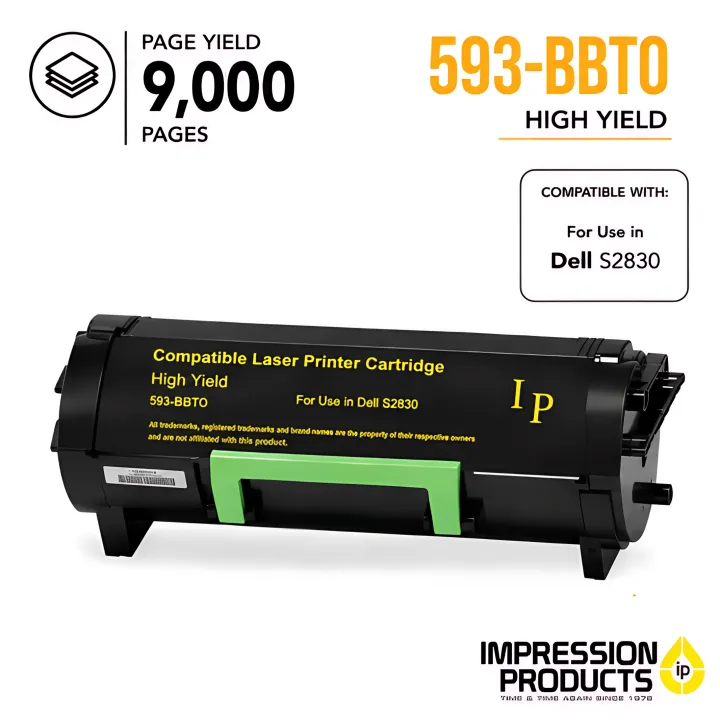
That's different from three related but distinct measurements:
- Printer duty cycle describes how many pages a device can handle in a month under heavy, multi-shift use.
- Cartridge shelf life covers how long an unopened cartridge stays usable in storage before installation.
- Page yield is specifically about pages produced from an installed cartridge until it's depleted.
Inside a laser printer, toner is transferred onto the page and fused with heat. How much toner gets used per page depends on page coverage: a sparse memo and a dense spreadsheet consume very different amounts from the same cartridge.
Why Yield Planning Matters
For a small office reordering the same Lexmark part number every few months, yield determines how often that reorder happens. For businesses with heavier daily output, misjudging yield has bigger operational consequences.
- Retail counters and pharmacies print receipts, labels, and patient paperwork constantly, so understated yield expectations can mean unplanned mid-shift cartridge swaps.
- Dealership parts and service departments print invoices and work orders in volume, where running short mid-transaction is a real operational problem.
- Multi-location printer fleets need predictable supply planning across sites, not guesswork.
Getting yield right connects directly to replacement frequency, operational continuity, and how much toner ends up wasted or over-ordered.
Factors That Influence Toner Page Yield in Real-World Operation
A cartridge and printer can both be working perfectly and still produce a different page count than the rating suggests. This isn't a defect. It's how toner consumption actually works.
Document density and coverage is the biggest variable. A page of plain 12-point text uses far less toner than a page with bold headers, tables, a company logo, or large filled graphic areas. Marketing materials and dense reports will pull down your effective yield compared to routine correspondence.

Other operational factors that shift real-world results:
- Print mode and resolution — higher-resolution settings and non-draft modes generally use more toner per page.
- Duplex printing — two-sided jobs can use slightly more toner per sheet than single-sided runs.
- Calibration and cleaning cycles — color calibration and idle cartridge cycling use small amounts of toner outside of actual print jobs.
- Job length — frequent short jobs often consume more toner overall than fewer long runs, because warm-up and calibration cycles use toner between jobs.
- Storage and handling — cartridges kept in original packaging, away from humidity, dust, and direct light, tend to perform more consistently.
Any model-specific claims about these factors should be checked against the printer manufacturer's own documentation, since behavior varies by machine.
Color Cartridges Need Separate Tracking
Color printing complicates yield tracking because cyan, magenta, yellow, and black cartridges each deplete independently. A test report might publish a combined average for the CMY set alongside a separate black figure, but that composite number isn't the yield of the full four-cartridge set printing together.
If you're managing a color multifunction printer, track each color's remaining life separately rather than assuming one number covers them all.
Page Yield Range and Key Factors
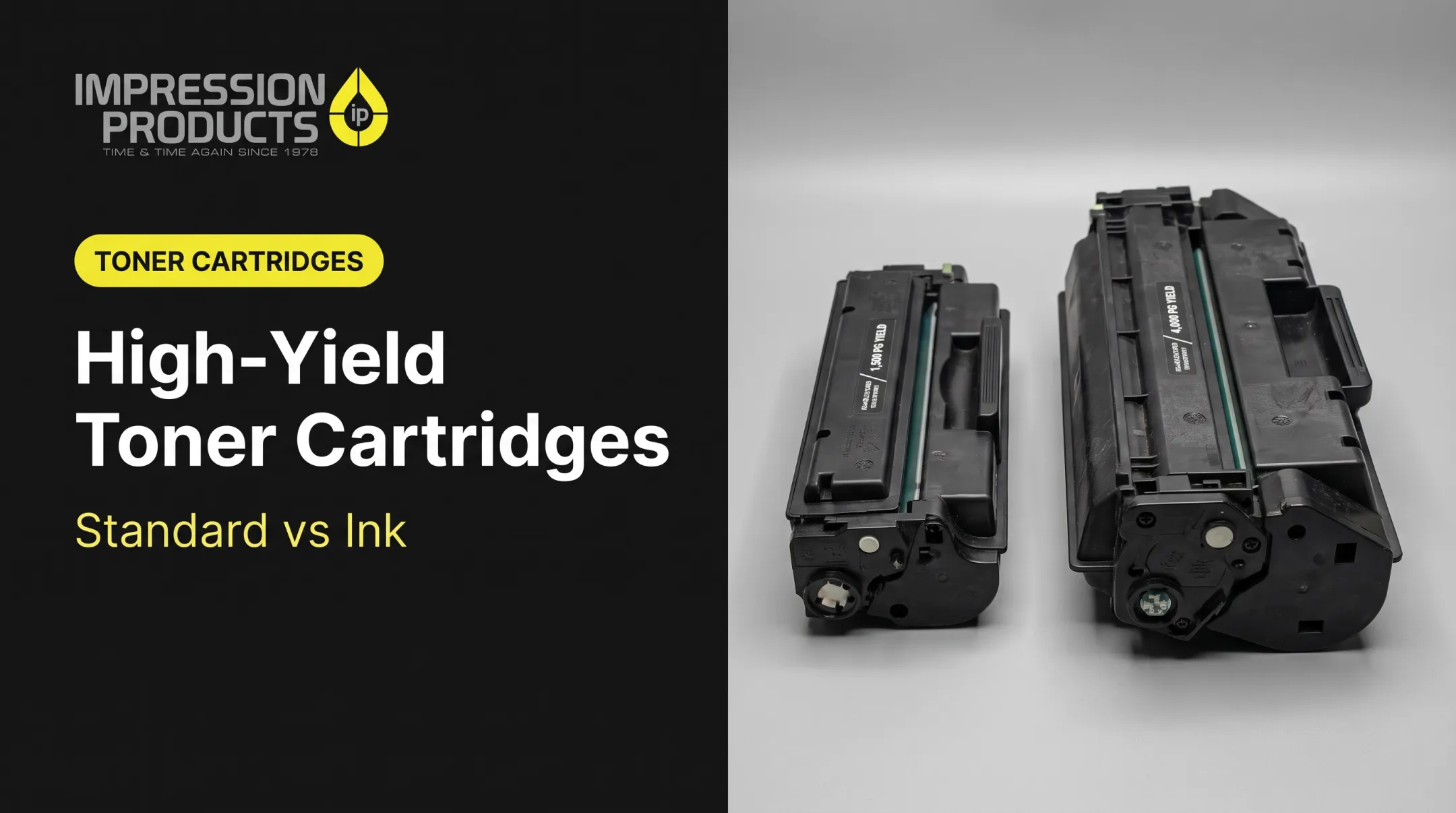
Page yield ratings vary enormously across cartridge families, driven by toner capacity, cartridge design, and the workload the cartridge is intended for. A standard-yield cartridge for a compact desktop printer might rate in the thousands of pages, while an extra-high-yield cartridge for a busy departmental printer can rate in the tens of thousands.
Nominal Yield Categories
Manufacturers generally sort cartridges into capacity tiers:
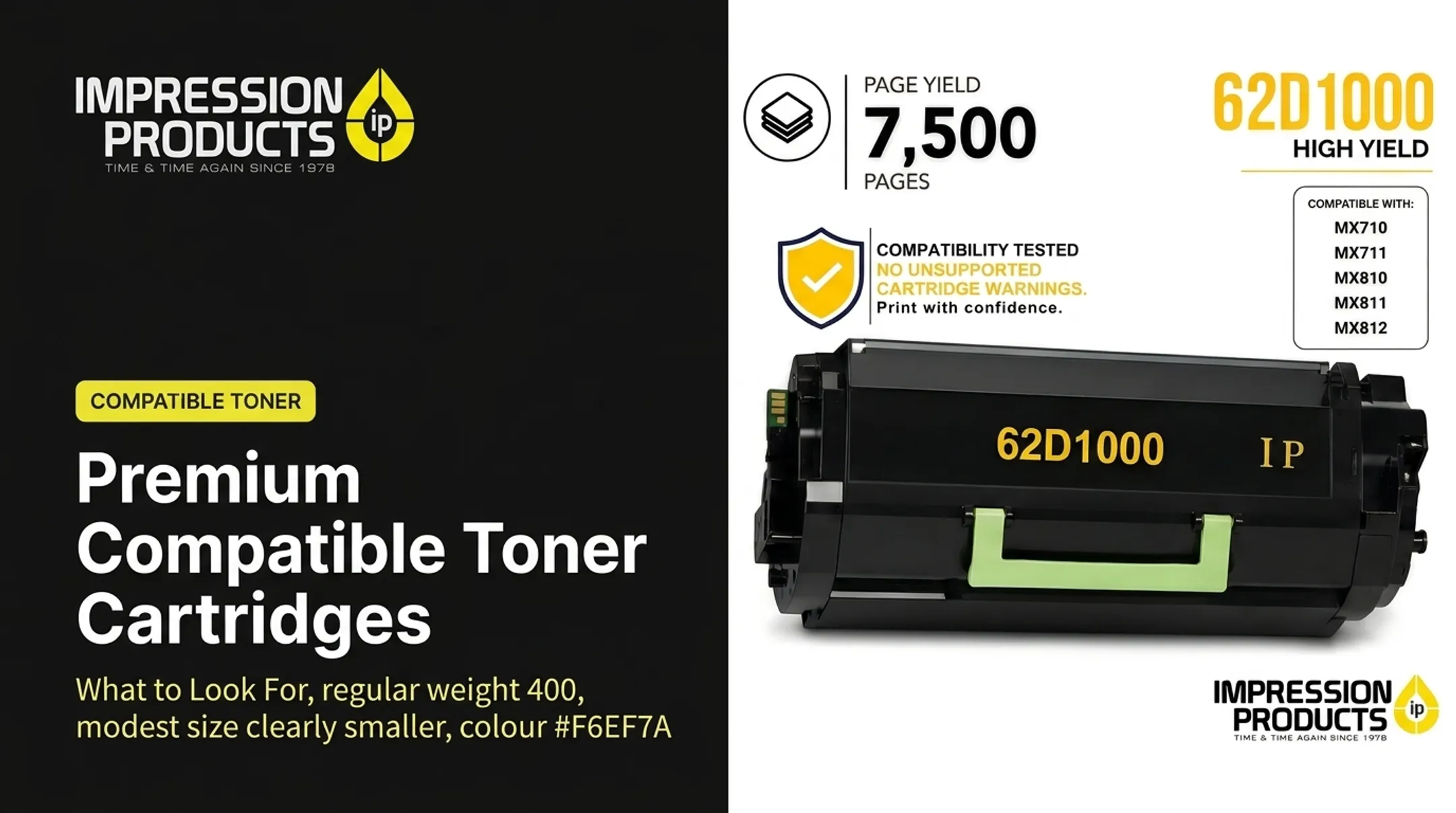
- Standard yield — lower toner capacity, lower upfront price. Example: the compatible Lexmark 56F1000 is rated for up to 6,000 pages.
- High yield — more toner, more pages per cartridge, higher price point. Example: the compatible Lexmark 60F1H00 is rated for up to 10,000 pages.
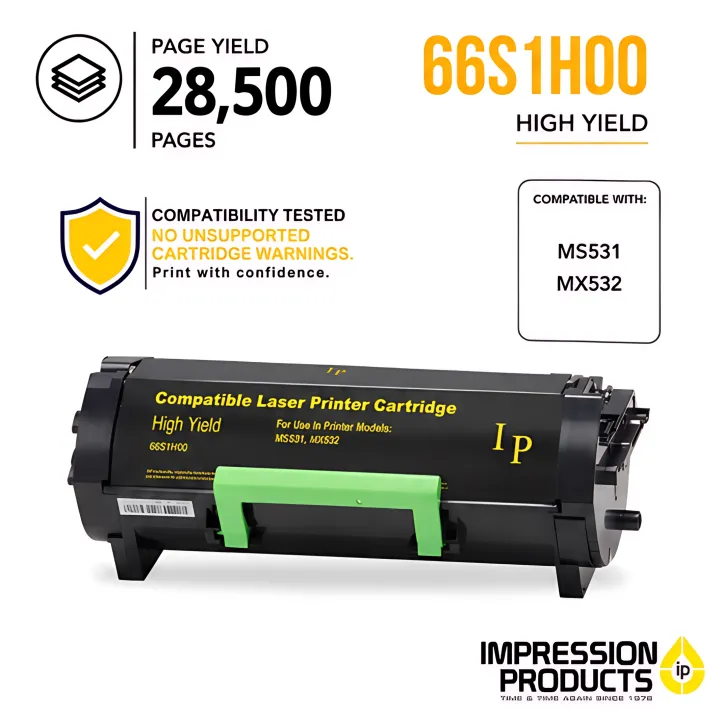
- Extra-high yield — the largest capacity tier, built for heavy-duty printing. Example: the compatible Lexmark 55B1X00 reaches up to 20,000 pages, and the Lexmark 62D1X00 goes up to 45,000 pages.
Within a single cartridge family, like Lexmark's 58D1 series, the gap can be dramatic: the standard-yield 58D1000 runs $80.00 for 7,500 pages, while the extra-high-yield 58D1X00 runs $135.00 for 35,000 pages. Always confirm the printer-compatible part number before buying — a higher-yield cartridge only helps if it's built for your specific printer model.

Choosing Standard or High-Yield Toner
The right tier depends on how you print, not just how much you print:
- Go standard-yield if your printing is light or intermittent, and a lower upfront cost matters more than minimizing cartridge swaps.
- Go high-yield or extra-high-yield if you print consistently or heavily, since fewer changes and a lower cost per page usually justify the higher initial price.
- Factor in your storage space and reorder tolerance — busier operations benefit from having a spare on hand, which high-capacity cartridges make more practical.
- Weigh the cost of running out during critical work, not just the sticker price at checkout.
Safe Operating Margin and Practical Expectations
Treat the printed yield rating as a comparison benchmark, not a hard floor or ceiling for every job. A cartridge rated for 10,000 pages of routine correspondence may fall well short if you're running dense marketing collateral or graphics-heavy forms at that same volume.
Separate cartridge yield from your printer's duty cycle. Pushing a printer beyond its recommended monthly workload can create reliability and maintenance issues that have nothing to do with how much toner is left in the cartridge.
How Toner Page Yield Is Specified, Measured, and Compared
Yield is a documented specification tied to recognized testing standards. Knowing where that number comes from helps you interpret it correctly.
Specification and Documentation
Check the cartridge packaging, manufacturer datasheet, or product listing for the rated yield, compatible printer models, cartridge color, and whether the figure follows a recognized test method. The current standards are ISO/IEC 19752:2025 for monochrome cartridges and its color counterpart, ISO/IEC 19798:2025.
Both measure toner yield specifically. They don't certify print quality or cartridge reliability. A "rated" or "declared" yield from a manufacturer isn't automatically identical to an independent lab's test result, so treat neither as a guaranteed real-world outcome.
Understanding 5% Page Coverage
Page coverage means the proportion of a printable page actually covered in toner. Testing bodies use a standardized coverage level, roughly 5% for monochrome pages, so different cartridges can be compared on equal footing.
According to Xerox's toner yields guide, documents printed at around 5% monochrome coverage under normal office conditions tend to see results similar, on average, to the declared ISO yield. Heavier elements push consumption up:
- Dark or shaded backgrounds
- Logos and photos
- Dense tables or fine print
- Full-page graphics
This 5% figure is a testing baseline, not a suggestion that you limit your documents to light text.
Calculating Cost Per Page
The formula is straightforward:
Cartridge price ÷ rated page yield = estimated cost per page
According to Keypoint Intelligence's toner cost analysis, this is exactly how industry cost comparisons are built — dividing each cartridge's price by its supply yield to get a comparable per-page figure, as detailed in its HP color toner cost study.
Worked example (illustrative, not a pricing claim): an $80.00 cartridge rated at 6,000 pages works out to roughly $0.0133 per page. Compare that against a $135.00 cartridge rated at 35,000 pages, which comes to about $0.0039 per page. That is a meaningfully lower cost per page despite the higher upfront price.

When comparing real options, also factor in:
- Separate color cartridge costs (C, M, Y priced individually)
- Multipack pricing
- Maintenance kit and imaging unit replacement costs
- Shipping charges
If you're unsure which cartridge or part number fits your printer, Impression Products' team can help identify a compatible toner option before you order, which avoids the cost of buying the wrong cartridge entirely.
What Happens When Real-World Printing Differs From Rated Yield
Printing above the 5% test coverage level generally burns through toner faster; light, text-only documents typically stretch a cartridge further. There's no single linear formula that predicts this precisely — it depends on your specific mix of documents.
Signs a cartridge may be nearing depletion:
- Fading or streaking output
- Printer low-toner alerts
- Inconsistent print density across a page
Note that these same symptoms can point to a worn imaging unit, drum, or fuser instead of an empty cartridge. A streak that repeats in the same spot on every page, for instance, often traces back to the imaging unit or drum rather than the toner itself.
Common misinterpretations worth avoiding:
- Treating the package yield as a guaranteed count for every job
- Assuming high-yield always costs less overall (check actual price against actual yield)
- Confusing cartridge yield with printer duty cycle
- Comparing yield numbers across incompatible cartridge families
Choosing an undersized cartridge for a busy environment creates real operational risk:
- More frequent cartridge changes
- Higher odds of running out mid-task
- Emergency ordering at a premium
- Higher effective cost over time
Whether you go with a genuine, compatible, or remanufactured cartridge, evaluate it on verified compatibility, actual print testing, support quality, and documented yield, not price alone.
For organizations running several printers, remote toner inventory monitoring can track consumption and trigger replacement orders before a shortage hits. It is worth adding when reactive ordering has already caused downtime.

Conclusion
Toner cartridge page yield is a standardized estimate built for comparing products—not a guaranteed page count for every document or printer setup. Page coverage, document type, printer settings, cartridge tier, and maintenance all affect how closely real results match the number on the box.
Before you order your next cartridge, check:
- Verified yield for your coverage level
- Confirmed compatibility with your printer model
- Actual cost per page, not just unit price
- Your real print volume and duty needs
Vendor support matters too. A supplier who helps you match the right part number and yield tier often saves more than any single discount—guidance Impression Products provides for Lexmark and Dell business fleets from its U.S. team.
Frequently Asked Questions
What is cartridge yield?
Cartridge yield is the approximate number of pages a cartridge can print under specified testing conditions, typically around 5% page coverage. Actual output depends on your document density, graphics, and printer settings.
What's the difference between high yield and standard yield?
High-yield cartridges contain more toner and print more pages before needing replacement, which usually lowers your cost per page. Standard-yield cartridges cost less upfront but suit lighter or intermittent printing better.
How long do toner cartridges last in a printer?
Rated yield, print volume, page coverage, and how you run the printer determine how long a cartridge lasts in use. Storage conditions before installation affect shelf life, not print output.
What does 5% page coverage mean for toner yield?
It means roughly 5% of the printable page area contains toner in the standardized test used to rate cartridges. Denser pages, with graphics, tables, or heavy text, consume toner faster and can reduce effective yield.
How do you calculate toner cost per page?
Divide the cartridge price by its rated page yield to get an estimated cost per page. For color printing or fleet comparisons, factor in separate cartridge costs, coverage differences, and shipping.
Does a remanufactured toner cartridge have the same page yield as an OEM cartridge?
Yield depends on the specific cartridge's design and testing, not simply its remanufactured status. Compare documented yield, compatibility testing, print-quality results, and warranty support rather than assuming automatic equivalence.