
Premium compatible toner cartridges are different from the unverified, bargain-bin alternatives flooding online marketplaces. The term refers to a third-party cartridge engineered for a specific printer model, built with quality controls and performance testing that back up its claims. A generic "compatible" label on a listing doesn't guarantee any of that - the distinction has to be verified, not assumed.
This guide breaks down what actually separates a dependable compatible cartridge from a risky one: compatibility verification, construction, page yield, print performance, supplier support, warranty protection, and total cost of ownership.
Key Takeaways
- Evaluate premium compatible toner on compatibility, print performance, yield, and supplier accountability—not price alone.
- Confirm exact printer model and cartridge part number; look-alikes can use different chips or drums.
- Ask whether a cartridge is new compatible or remanufactured, how it's tested, and how defects get resolved.
- Quality compatible toner lowers cost per page and waste without sacrificing reliability.
- For printer fleets, replenishment support matters as much as the cartridge itself.
What Are Premium Compatible Toner Cartridges?
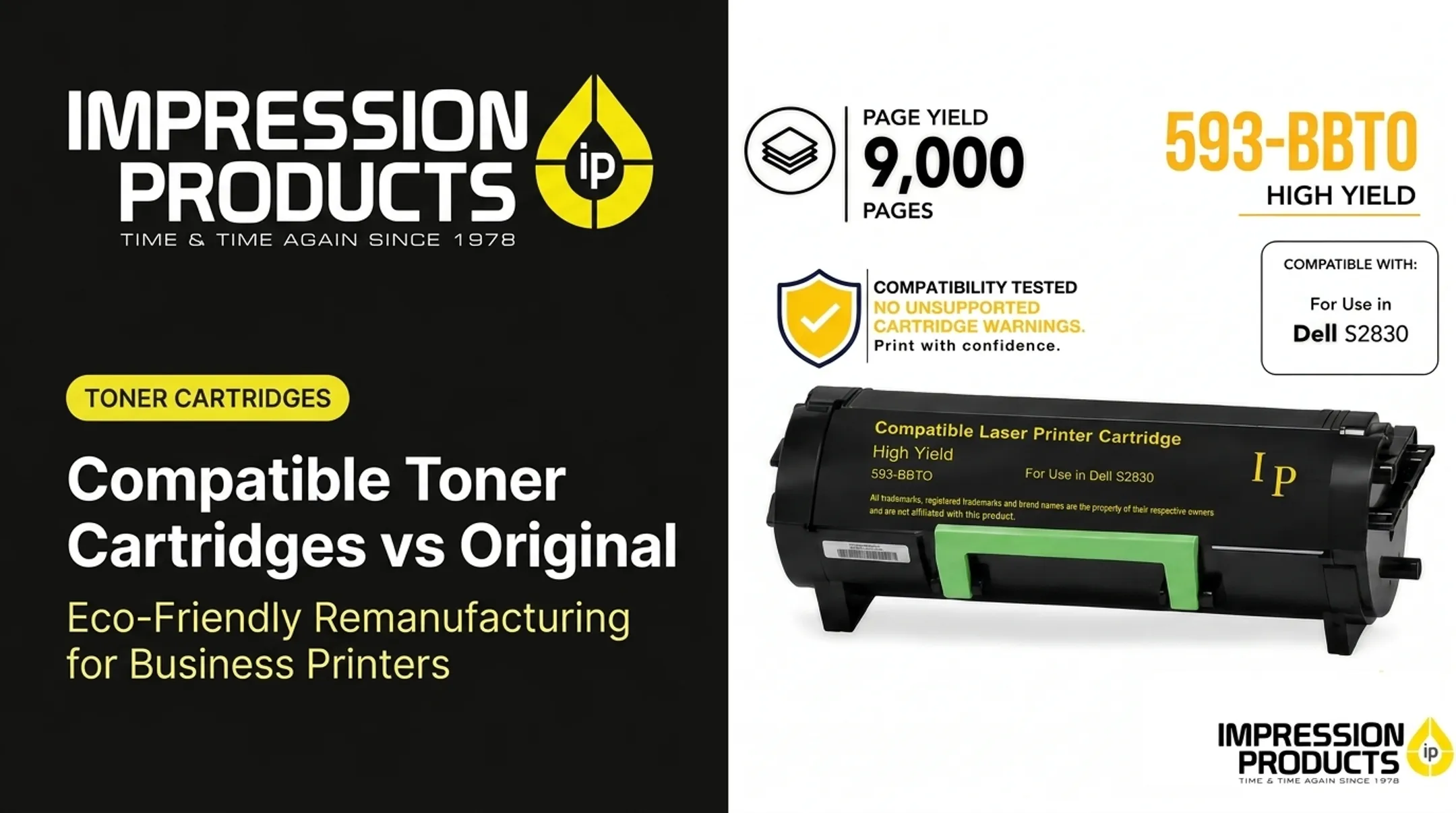
A compatible toner cartridge is manufactured by a company other than the printer brand, built specifically to work in an OEM printer model or model family. It is a separately engineered cartridge built to match OEM fit and performance, not a repackaged OEM product.
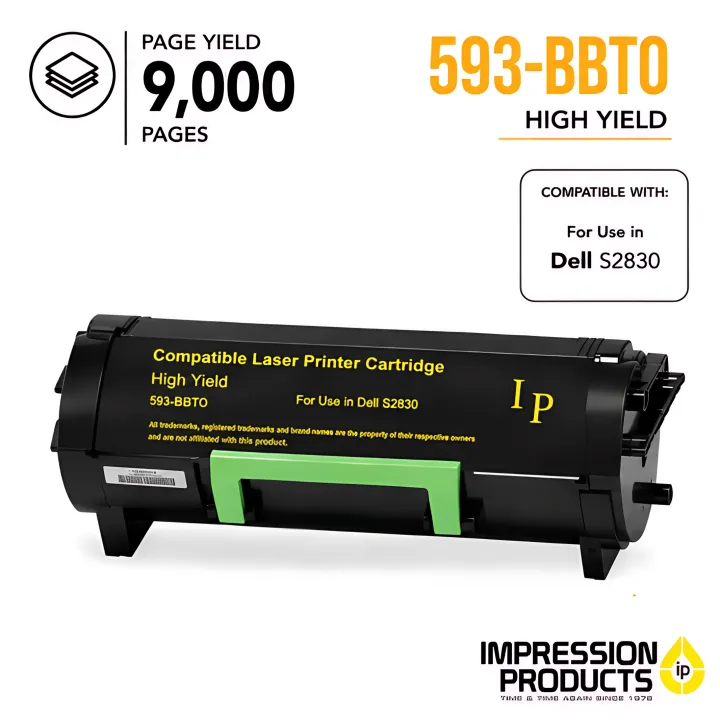
That's different from a few other terms buyers often see side by side:
- OEM cartridges are made and sold directly by the printer manufacturer, using proprietary materials and specifications.
- New compatible cartridges are newly manufactured by a third party, using new components engineered for a specific printer.
- Remanufactured cartridges start as used OEM cores that are cleaned, inspected, and rebuilt with new parts where needed, then refilled and retested.
- Refilled-only cartridges get toner added without disassembly, inspection, or worn-part replacement, which often leads to smudging or early failure.
"Premium" isn't a regulated or standardized label. Nothing stops a supplier from calling a bargain cartridge "premium" on a product page. Before comparing prices, ask directly about:
- Testing process before a cartridge ships
- Materials and components used in the cartridge
- Published yield claims and how they're measured
- Warranty length and what it covers
- Support access if something goes wrong
Impression Products, for example, labels each cartridge as new compatible or remanufactured, not simply "compatible." Every cartridge is manufactured by Impression Products itself, not relabeled OEM stock. That transparency separates a claim you can verify from one you have to take on faith.
Cartridge Components That Influence Performance
What's actually inside the cartridge determines whether your pages look sharp or streaky. A few components do most of the work.
Toner Formulation and Fusing
The toner itself affects text density, image clarity, and how well it fuses to the page. Poor-quality toner shows up fast:
- Gray background shading across the page
- Smudging when toner hasn't properly fused to paper
- Inconsistent density from the first page to the last
Drum, Developer, and Wear Parts
The drum, wiper blade, developer roller, and seals all wear down with use. Worn or damaged parts are a common cause of print defects:
- Toner buildup, a dirty imaging unit, or a worn drum typically causes streaking
- Scratched drums or internal debris create repeating black vertical lines
- Worn developer components or a failing imaging unit contributes to gray backgrounds
A cartridge that replaces these wear parts - rather than reusing them as-is - is far more likely to perform consistently through its full page yield.
Why the Chip Matters
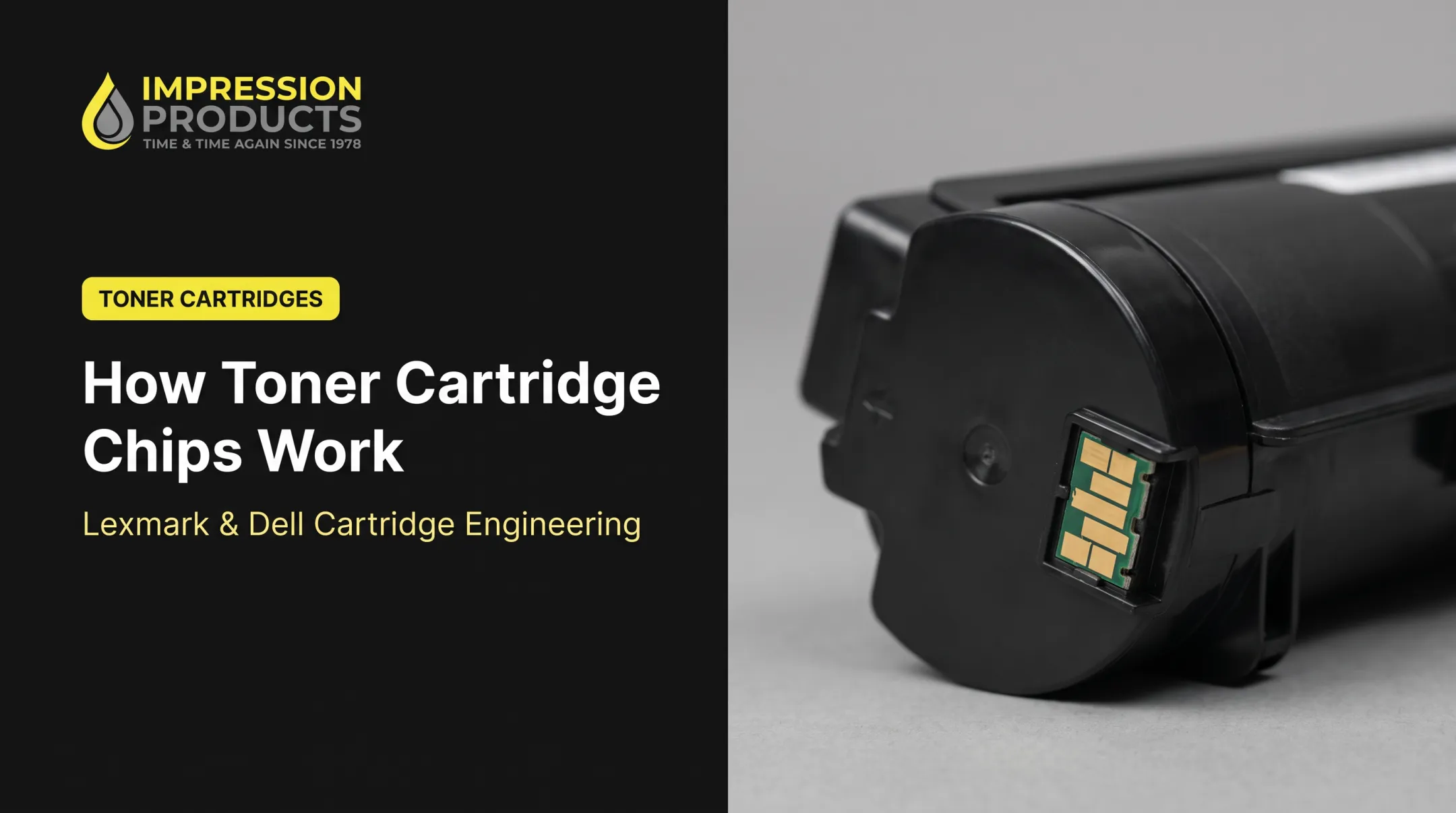
The cartridge chip handles printer recognition, toner-level reporting, and error messaging. It also has to work correctly with your printer's firmware.
A mismatched or missing chip is a leading cause of:
- "Unsupported cartridge" warnings
- Inaccurate toner-level readouts
- Printers that refuse to print
Remanufactured vs. Simply Refilled
This is where remanufacturing and refilling part ways. A quality remanufactured cartridge involves inspecting the used core, replacing worn components, resealing it, and testing it before shipment.

Impression Products, for instance, remanufactures using genuine OEM cores whenever available and replaces the components that most affect print quality before every cartridge ships. A cartridge that's simply been refilled skips those steps. It might work fine for a few hundred pages, but it's far less likely to hold up through its rated yield.
Benefits of Using a High-Quality Compatible Cartridge
The purchase price on a toner cartridge tells you almost nothing on its own. What matters is cost per page: price divided by pages actually obtained, plus any reprints or downtime along the way.
Lower Cost Per Page, Not Just Lower Price
A quality compatible cartridge can cost meaningfully less than OEM while delivering a comparable yield. Impression Products, for example, prices its compatible and remanufactured Lexmark cartridges to deliver roughly 30-50% savings versus OEM, with standard, high, and extra high-yield options ranging from $50 to $215 depending on model and yield.
Fewer Interruptions
Consistent print quality and a realistically tested yield cut day-to-day friction:
- Fewer reprints from faded or streaky pages
- Fewer surprise "replace cartridge" messages mid-job
- Fewer help-desk calls about print quality
For a hotel front desk, pharmacy counter, or dealership parts department printing all day, that reliability is worth more than a few dollars saved upfront.
Environmental Impact
Remanufacturing extends the life of an existing cartridge instead of sending it to a landfill and manufacturing a new one from raw materials. HP's own recycling program recovered 9,200 tons of Original HP and Samsung toner cartridges in 2024. That volume shows how much material a recovery loop can keep out of landfills, though the figure reflects HP's program specifically, not an industry-wide rate.

When OEM Still Makes Sense
Compatible isn't always the right call. For a brand-new printer model without a well-tested compatible option yet, or a workflow with strict manufacturer requirements, OEM cartridges may be the safer choice until a proven alternative exists.
What to Consider When Choosing Premium Compatible Toner
Use this checklist to connect cartridge specifications to what actually matters: print quality, cost per page, uptime, and waste reduction. Compare the full purchase and support experience, not just the price tag on the listing.
Exact Printer and Cartridge Compatibility
Start with the exact printer manufacturer, complete model number, and any region-specific variation - a small model suffix can mean an entirely different cartridge. Then confirm the OEM part number the compatible cartridge is designed to replace.
A few details commonly get overlooked:
- Color vs. monochrome cartridge type
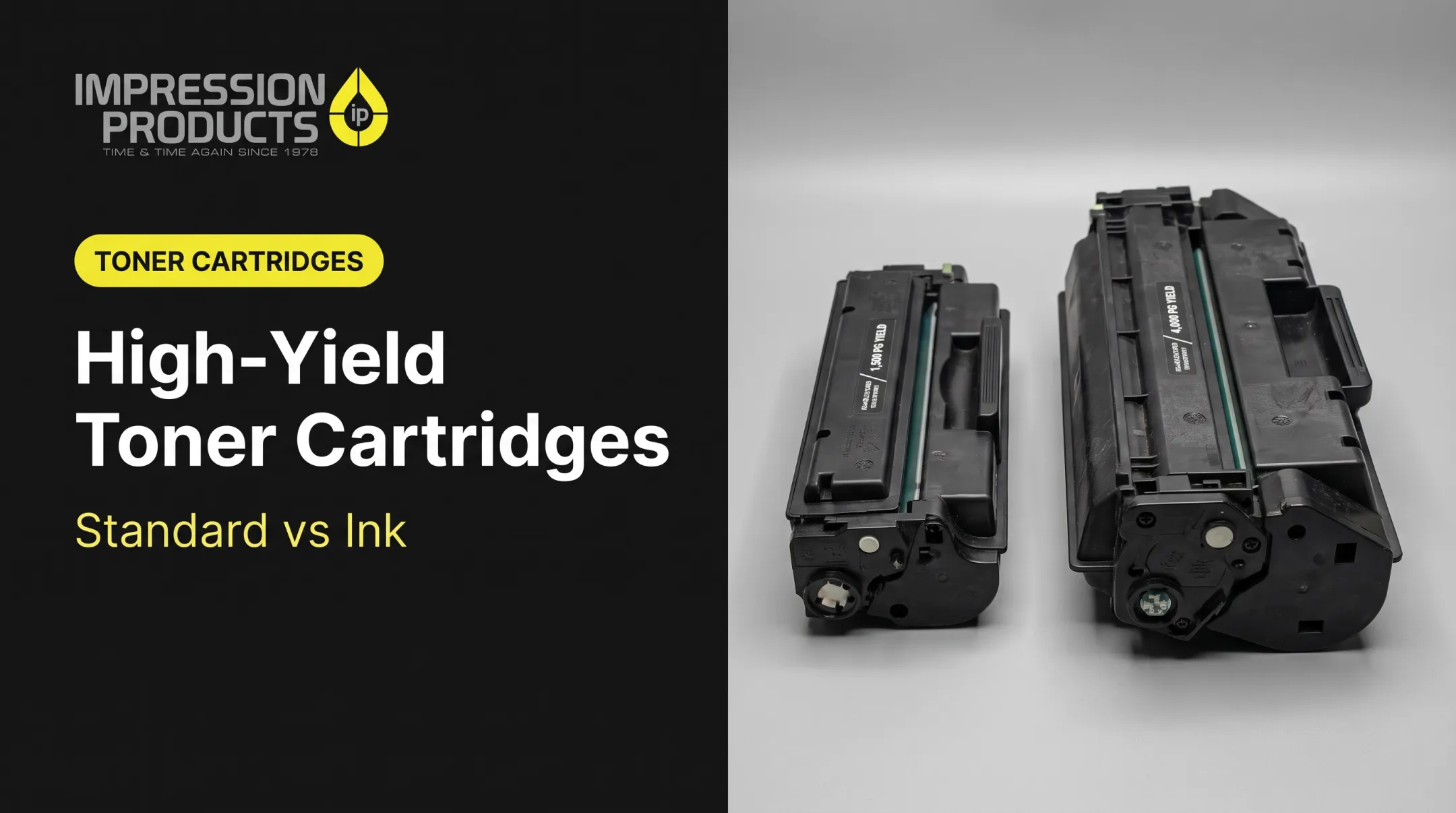
- Standard-yield vs. high-yield vs. extra high-yield capacity
- Multifunction printer requirements that differ from single-function models
- Chip configuration matching your printer's firmware
Impression Products' Compatible Lexmark 56F1000, for instance, replaces OEM part number 56F1000. It is listed specifically for MS321dn, MX321adn, MS421dn, MX421ade, MS521dn, MS521ade, MS621dn, MX621ade, MS622de, and MX622adhe printers.
Check a supplier's compatibility tool or documentation, or call their support line, rather than relying on a photo that looks close enough.
Print Quality and Performance Testing
Ask suppliers directly how they test cartridges before shipping. Useful checks include:
- Text sharpness and grayscale or color consistency
- Toner adhesion, streaking, and backgrounding
- Leakage and printer error rates
The Imaging Technology Council's STMC guide references standards like ASTM F2036 for evaluating image density and background. Use it as a reference point when a supplier makes print-quality claims.
If you're printing customer-facing documents - patient paperwork at a pharmacy counter, sales contracts at a dealership, guest folios at a hotel front desk - test a sample cartridge on your actual paper stock and typical documents before standardizing across locations.
Page Yield and Total Cost per Page
Advertised page yield is measured under a standardized test, not your actual office conditions. ISO/IEC 19752, the current standard for monochrome cartridge yield, assumes roughly 5% page coverage on a specific test document - not your invoices, labels, or graphics-heavy reports.
Coverage, document type, print settings, and duplex printing all shift real-world results, sometimes considerably.
Here's a simple way to compare cartridges honestly:
Cost per page = cartridge price ÷ expected usable pages
Then factor in what a sticker price doesn't show: reprints from quality issues, shipping costs on replacements, and downtime while you wait for the next cartridge. A $50 cartridge that needs replacing twice as often isn't actually cheaper than a $75 cartridge rated for double the pages.
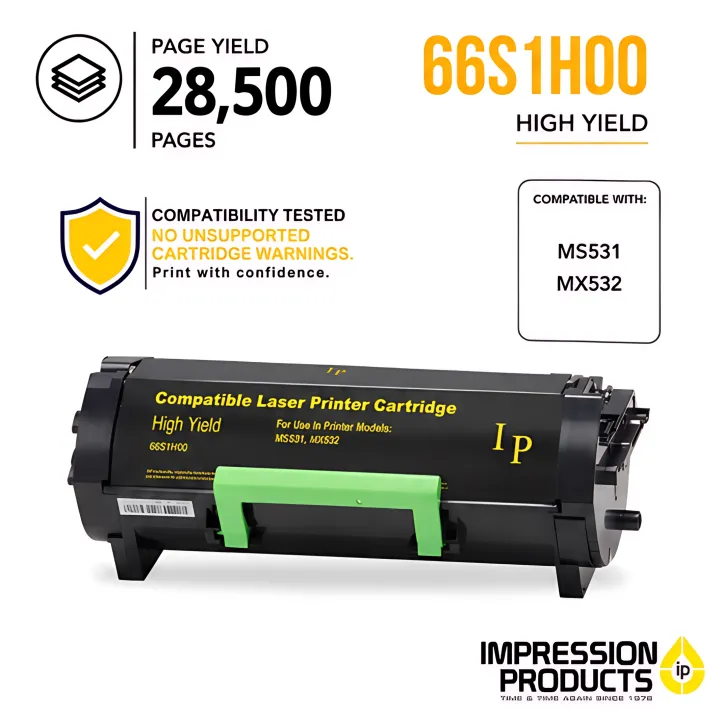
For example, Impression Products lists its Compatible Lexmark 62D1000 at $75 for 7,500 pages - roughly a cent per page. Its Lexmark 66S1X00 extra high-yield cartridge delivers up to 31,000 pages, which lowers cost per page and how often you need to reorder.

Cartridge Condition, Materials, and Manufacturing Standards
Ask suppliers to state clearly whether a cartridge is new compatible, remanufactured, or refurbished - and what that means in practice. A remanufactured cartridge should specify what's inspected, cleaned, and replaced, not just refilled.
Look for:
- Quality-controlled toner formulations tested for consistency
- New or inspected wear components (drum, wiper blade, developer)
- Secure seals and packaging designed to survive shipping
- Documented remanufacturing practices, not vague marketing language
If your organization has environmental procurement requirements, ask for specifics: recycling program details, material-reduction data, or domestic manufacturing claims. Standards like DIN 33870 apply specifically to remanufactured cartridges, so a new-built compatible cartridge can't legitimately claim compliance with it.
Warranty, Returns, and Supplier Accountability
Review the guarantee's length and scope: does it cover defective cartridges, poor print quality, leakage, printer-recognition errors, and replacement shipping? A vague "satisfaction guarantee" without specifics isn't worth much.
Under U.S. law, a printer manufacturer generally can't void your printer's warranty solely because you used a third-party cartridge. The FTC has confirmed that companies can't require branded parts to preserve warranty coverage, except for damage the third-party product actually caused. Still, check your printer's specific warranty terms.
Before a larger fleet order, confirm:
- The supplier's return process and response times
- Whether support is easy to reach when a cartridge streaks or fades
- A documented policy in writing, not just a verbal promise
Availability, Reordering, and Fleet Support
For a single printer, availability might just mean fast shipping. For a fleet across multiple locations, it means something more: consistent stock, recurring-order options, and support that scales.
Ask suppliers about:
- Stock availability and shipping timelines
- Recurring or automatic reorder options
- Support for identical cartridge requirements across multiple sites
- Remote toner inventory monitoring or predictive refill analysis
A simple cartridge inventory list - printer models, part numbers, average monthly usage, reorder points, preferred suppliers - prevents the emergency same-day order that costs more and stresses everyone out.
How Impression Products Can Help
Impression Products has been in the toner business since 1978, when founder Walter Smith started selling typewriter ribbons out of a 400-square-foot apartment in Charleston, West Virginia.
When laser printers took over office workflows in the late 1980s and early '90s, Eric Smith joined the family business and expanded into brand-name laser toner and remanufactured cartridges. That work later grew into printer repair and managed print services.
That history shows up in how the company builds cartridges today. Compatible and remanufactured Lexmark and Dell cartridges are manufactured by Impression Products itself, tested to meet or exceed OEM performance standards, and remanufactured in the U.S. using genuine OEM cores whenever available.
Buyers get practical support built around that manufacturing model:
- Knowledgeable U.S.-based support before and after the sale
- Help identifying the correct toner, imaging unit, or maintenance kit for your printer model
- Same-business-day shipping on orders placed by 5:00 PM EST, with U.S. delivery guaranteed within 2 business days
- A Lifetime Satisfaction Guarantee on every cartridge
For businesses running printer fleets across multiple locations, Impression Products also offers Remote Toner Inventory Monitoring. The service tracks toner levels in real time, forecasts refills, and automatically orders replacements before anyone runs out.

It's a practical fit for hotel groups, pharmacy chains, and dealership parts departments that go through cartridges fast and can't afford unplanned downtime.
If you're not sure which cartridge matches your printer, call 304-345-3740 before a fleet order or when comparing American-made, remanufactured options.
Conclusion
The right premium compatible toner cartridge offers verified compatibility, consistent print quality, a realistic yield, responsive support, and a total cost per page that holds up under real use.
Start with your exact printer model and cartridge part number. Before you commit to a fleet-wide order, confirm:
- Construction quality and performance testing
- Warranty coverage and supplier reputation
- Environmental claims you can verify
- Total cost per page on your actual workloads
Cartridge performance isn't a one-time decision. Review it periodically with real numbers: actual cost per page, defect frequency, reprints, downtime, and how reliably your supplier keeps you stocked. If those numbers stop adding up, ask your supplier the questions above again, or find one who answers them clearly the first time.
Frequently Asked Questions
Should I buy compatible toner cartridges?
A high-quality compatible cartridge can be a cost-effective alternative to OEM toner. Verify the supplier's testing process, exact compatibility, warranty coverage, and support before switching.
Which cartridge is compatible with my printer?
Compatibility depends on your exact printer model, region-specific variation, cartridge part number, yield type, color, and chip configuration. Check your printer manual or a supplier's compatibility tool rather than guessing from a photo.
What's the difference between compatible and remanufactured toner cartridges?
A compatible cartridge is newly manufactured by a third party for a specific printer. A remanufactured cartridge reuses an existing OEM cartridge body that's been inspected, cleaned, and rebuilt with new components as needed.
Do compatible toner cartridges produce good print quality?
Quality varies by supplier and manufacturing controls. Look for documented testing, realistic yield claims, responsive customer support, and a satisfaction or replacement guarantee before standardizing on one.
Can compatible toner cartridges damage my printer or void its warranty?
Under FTC guidance, a manufacturer can't void your warranty solely for using third-party cartridges, though damage the cartridge actually causes may not be covered. Check your printer's specific warranty terms or contact the manufacturer with model-specific questions.
How can I tell if a compatible toner cartridge is high quality?
Confirm exact part-number compatibility, cartridge type (new compatible vs. remanufactured), component quality, performance testing, and yield methodology. Then compare warranty terms and total cost per page, not just sticker price.