
Introduction
Printing might feel like a relic of the pre-digital office, but it isn't going anywhere. Even as companies adopt cloud tools and hybrid schedules, invoices, contracts, patient forms, and shipping labels still need to hit paper.
Hotels, dealerships, pharmacies, and multi-location offices all lean on printed documents to keep daily operations moving.
Unmanaged printing quietly drains time and money. Toner prices climb. Cartridges run out mid-shift.
A single malfunctioning printer at the front desk can stall an entire workflow. Employees who should be serving customers instead hunt for toner or wait on a repair call.
This article breaks down what professional print management does, how it affects cost and productivity, and which businesses see the biggest return. Whether you're running a five-printer office or a fleet spread across dozens of locations, the goal is the same: turn printing into a predictable process instead of a recurring headache.
Key Takeaways
- Professional print management unifies printers, toner, maintenance, usage, and support into one process
- Better cost visibility, fewer supply disruptions, consistent quality, and a lighter internal workload
- Compatible and remanufactured cartridges lower cost per page and cut waste when matched and tested
- High-volume and multi-location businesses gain the most—especially where printer downtime is costly
- Track cost per page, supply availability, uptime, service response, and print volume to gauge results
What Is Professional Print Management?
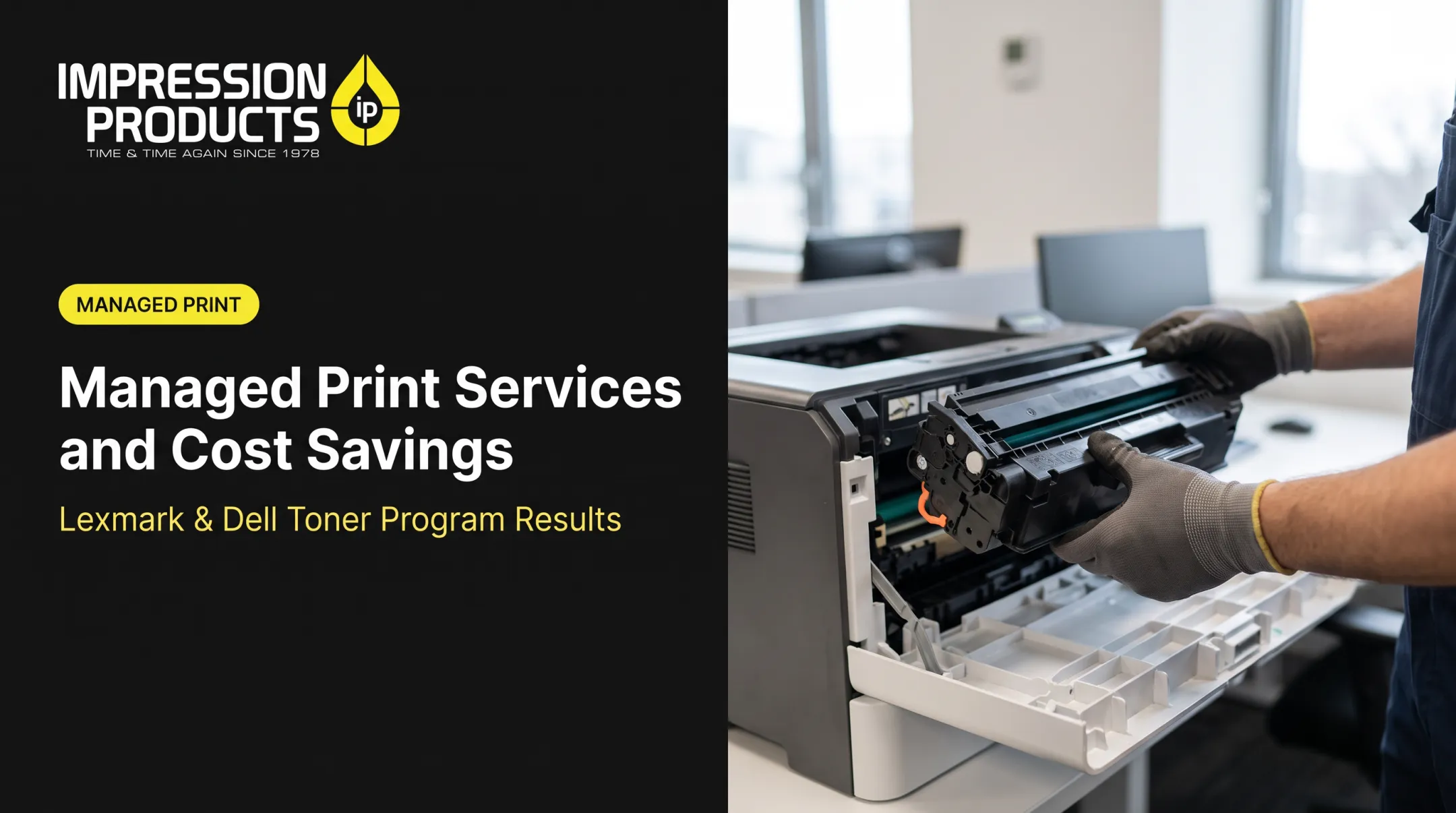
Professional print management is the coordinated oversight of a business's printers, consumables, maintenance, usage, and support, handled by an experienced provider or structured managed service. Instead of each department ordering toner on its own, one program tracks the entire print environment.

A typical program includes:
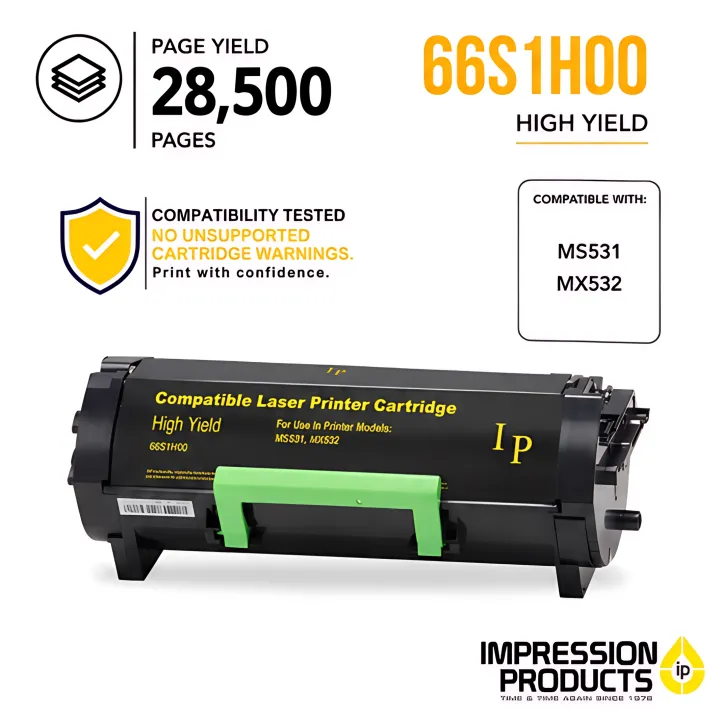
- Printer and cartridge selection guidance, including compatibility checks
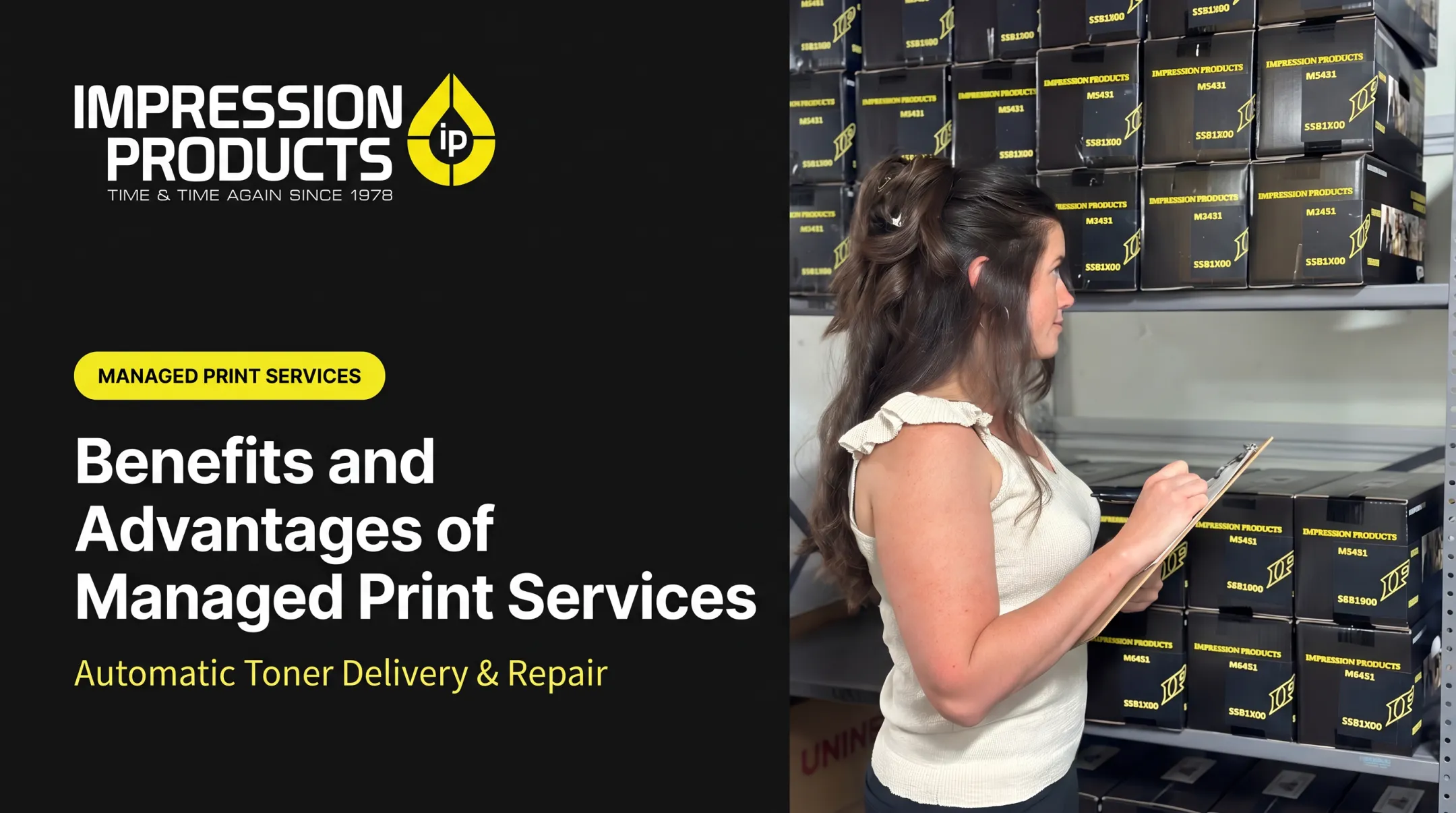
- Inventory management and automatic replenishment
- Repair coordination and on-site technical support
- Usage monitoring and reporting across every device
This approach serves small and mid-sized offices, hotels, pharmacies, retail counters, auto parts stores, and dealership service departments. It also scales to organizations running printer fleets across dozens of locations.
Impression Products supports businesses with as few as five printers and organizations managing thousands across multiple sites.
The goal is a print operation that stays stocked, maintained, and predictable. When someone needs a working printer, it works.
Key Advantages of Professional Print Management
The benefits below focus on measurable outcomes—cost, efficiency, reliability, quality, and sustainability—not just keeping printers running.
Lower and More Visible Printing Costs
Toner isn't the only line item. The real cost of printing includes emergency orders, maintenance calls, repairs, wasted supplies, employee time, and downtime. Professional oversight pulls those costs into one view instead of leaving them scattered across department budgets.
Cartridge standardization, cost-per-page analysis, and usage monitoring let businesses compare compatible, remanufactured, or OEM options based on actual performance data rather than guesswork.
Cost visibility matters even after a program is in place. In Quocirca's 2025 Managed Print Services Landscape report, 41% of existing MPS customers still called cost control a leading challenge—proof that a contract alone won't deliver savings without a documented baseline.
KPIs to track: cost per page, monthly print spend, emergency purchase frequency, cartridge yield, maintenance expense, and internal labor time.
Where it matters most: high-volume, price-sensitive sites—pharmacies, hotels, dealership parts counters, and any office that reorders toner too often.
Fewer Disruptions and Improved Operational Efficiency
Monitoring toner levels, planning replenishment ahead of time, and coordinating repairs before a printer fails all reduce the scramble that happens when a device goes down mid-shift. Printers rarely fail at convenient times.
Reliable printer availability underpins everyday workflows: invoices, work orders, patient paperwork, shipping labels, and front-desk check-ins all depend on a printer that works on demand.
Reliability is also where expectations and reality tend to diverge. Quocirca's 2025 research found 55% of MPS buyers considered improved service quality very important, yet only 44% said their current provider had been very effective at delivering it. That gap is worth asking about before signing a contract.
KPIs to track: device uptime, supply stockouts, service response time, repeat service calls, delayed print jobs, and employee time spent troubleshooting.
Where it matters most: customer-facing counters, time-sensitive documentation, multi-location businesses, and offices without dedicated IT staff.
Consistent Quality, Sustainability, and Professional Support
Expert cartridge-to-device matching, compatibility testing, and routine maintenance checks cut down on streaks, faded pages, reprints, and misprints across a fleet. That consistency matters most when the printed page is what a customer actually sees.
The same discipline supports sustainability goals. Remanufactured cartridges cut waste by reusing the shell and core components instead of discarding empties, giving a genuine OEM cartridge a second life. A 2023 District of Columbia toner and ink cartridge procurement guide notes that every pound of new material used in remanufacturing conserves an estimated 5 to 9 pounds of virgin material—a materials estimate, not a per-cartridge promise, but a clear case for reuse.

Impression Products has remanufactured cartridges alongside its compatible toner line since the early 1990s. Each cartridge goes through compatibility and performance testing aimed at meeting or exceeding OEM standards, backed by nearly five decades of industry experience, U.S.-based support, and a lifetime satisfaction guarantee.
Testing and support sit inside the process, not as an add-on after the sale.
KPIs to track: reprint rates, quality-related complaints, cartridge disposal volume, recycling or reuse activity, and supply-related waste.
Where it matters most: organizations with sustainability or Buy-American procurement priorities, businesses producing customer-facing documents, and companies that need dependable U.S.-based support before and after purchase.
What Happens When Professional Print Management Is Missing
Unmanaged printing often looks cheap because its costs are scattered, a rush order here, a service call there, an employee spending twenty minutes hunting for toner. Add it up across a year and the picture changes.
Common consequences include:
- Incorrect or inconsistent cartridges leading to reprints and quality complaints
- Reactive ordering causing shortages, expedited shipping fees, and interrupted workflows
- Untracked device usage that hides high-cost printers or underused equipment
- Internal staff spending disproportionate time on print tickets, orders, and repairs instead of their actual jobs
Those same problems get expensive fast once a fleet grows. California's Employment Development Department is a clear case study.
According to a 2026 Government Technology report on EDD's print system overhaul, the pre-overhaul fleet spanned more than 2,026 devices across headquarters and 130 field offices. That mix covered over 150 models, 16 manufacturers, and 137 unique consumables.
After consolidating to just over 730 devices and centralizing oversight, the agency's monthly printing costs dropped 33%, or $51,231, based on a Xerox analysis cited in the same report.

EDD is a large public agency, so its dollar figures won't translate directly to a five-printer office. But the underlying lesson holds at any scale: printer sprawl and fragmented purchasing make it nearly impossible to see where money and time are actually going.
How to Get the Most Value from Professional Print Management
A managed print program delivers its strongest results when recommendations are based on real usage data and ongoing performance reviews, not a one-size-fits-all contract.
Start With a Complete Print Assessment
- Inventory every printer and imaging device, its location, and its primary users
- Document cartridge part numbers and current print volumes
- Map critical workflows: invoices, labels, forms, patient paperwork, customer-facing documents
- Establish a baseline for cost per page, supply consumption, service incidents, uptime, and print quality before making any changes
That baseline is what you measure against after the program starts—cost, uptime, and supply use included.
Choose a Service Model That Matches Operational Needs
Not every business needs the same level of service. Determine whether you need:
- Cartridge supply only
- Printer repair and maintenance
- Fleet-wide oversight and reporting
- Automatic replenishment and remote monitoring
- Some combination of the above
Confirm compatibility assurances, quality-testing standards, service response times, shipping terms, and return or recycling processes in writing before you sign.
Use Monitoring and Replenishment Proactively
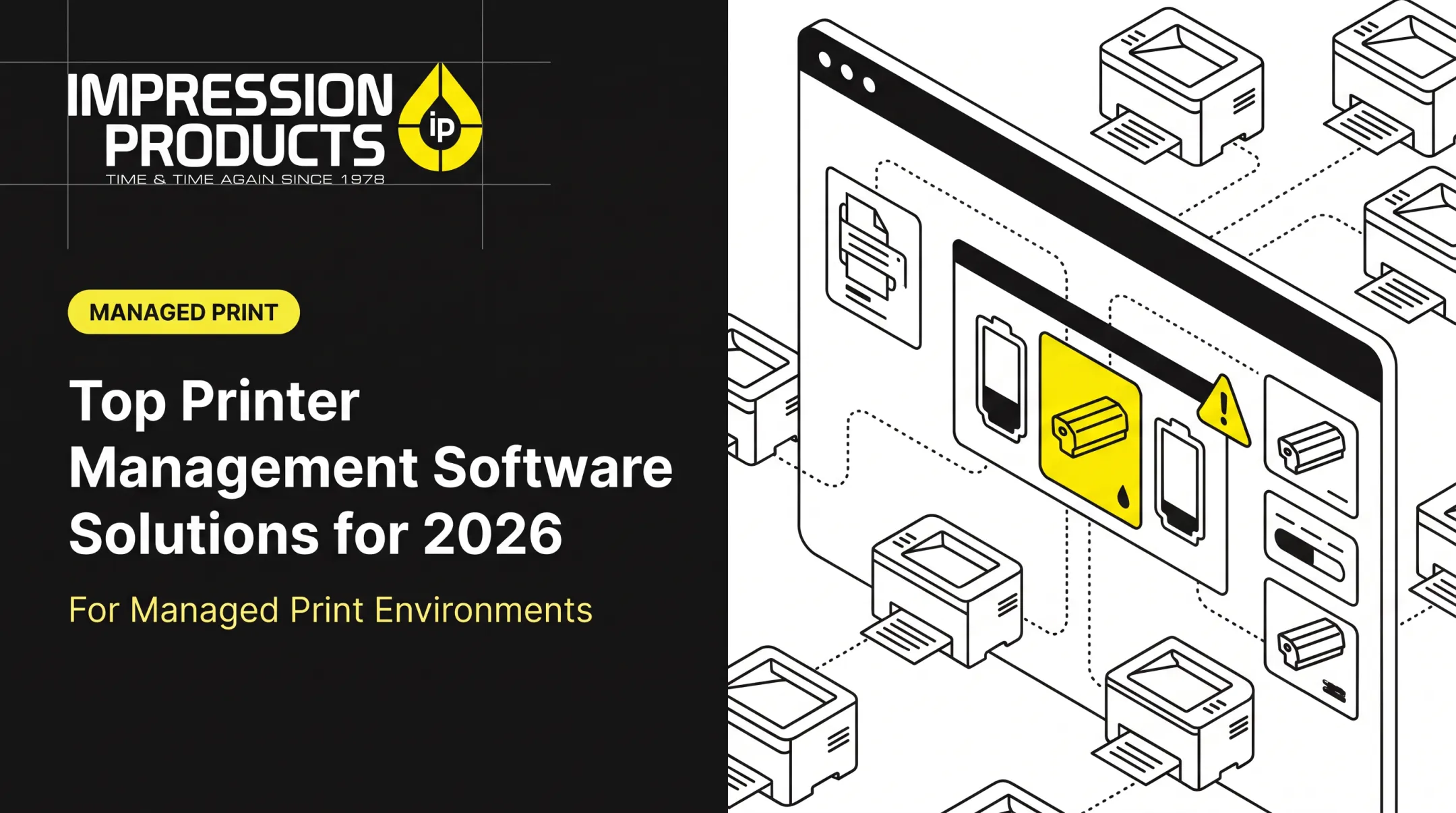
Remote toner inventory monitoring, predictive refill analysis, and automatic reorder triggers replace guesswork with data. Instead of an employee checking toner levels by eye, the system flags a cartridge running low before it becomes an emergency.
Impression Products includes this in its managed print services, pairing remote monitoring with toner supply, repair, and technical support so cartridges usually arrive before you run out.
Review Results and Optimize Continuously
A print assessment isn't a one-time event. Recommend monthly or quarterly reviews covering:
- Cost per page and total print volume
- Stockouts and downtime incidents
- Service calls and repeat issues
- Reprints and supply waste
Use those reviews to drive real changes: consolidate underused devices, adjust reorder points, switch cartridge types, repair or replace weak equipment, and update user policies. Lasting value comes from repeating that loop—not from a single fleet reset.

Conclusion
Professional print management turns printing from a reactive purchasing task into a controlled business process. One program covers supplies, equipment, maintenance, quality, and support together instead of separately.
The real payoff goes beyond a single line-item discount. You get:
- Cost visibility across your print spend
- Fewer interruptions from empty cartridges and downtime
- Dependable print quality
- Less time spent on printer tickets
- More responsible cartridge use and less waste
If your business is dealing with recurring toner shortages, climbing costs, printer downtime, or a fleet that's grown faster than anyone's tracking it, take a closer look. Review your current printers and print patterns, then talk to a provider with the experience to match a program to what your business actually needs.
Frequently Asked Questions
What is professional print management?
Professional print management is the coordinated oversight of a business's printers, toner, maintenance, usage, and support, typically handled by an outside provider. It replaces scattered, reactive purchasing with an ongoing, tracked process.
What are the main benefits of professional print management for businesses?
The main benefits are improved cost visibility, lower operating expenses, reliable supply availability, reduced downtime, consistent print quality, and less admin work for staff.
How does professional print management reduce printing costs?
It uses cost-per-page analysis, usage monitoring, and cartridge standardization to identify waste. Choosing the right compatible, remanufactured, or OEM supplies lowers unit cost, while proactive replenishment avoids expensive emergency orders.
Is professional print management suitable for small businesses?
Yes. Small businesses that print frequently, can't afford downtime, or lack time to manage toner and maintenance often see meaningful gains, even with just a handful of printers.
What is the difference between managed print services and buying toner independently?
Buying toner independently means ordering cartridges one purchase at a time. Managed print services add ongoing monitoring, replenishment, maintenance, compatibility guidance, and reporting across the entire fleet.
Can professional print management help businesses meet sustainability goals?
Yes, through cartridge reuse and remanufacturing, reduced reprints, and better inventory control that limits waste. Businesses should still verify a provider's specific recycling and environmental practices.