
This is the standard-yield versus high-yield question, and it trips up more offices than it should. Toner cartridges (used in laser printers) work differently than ink cartridges (used in inkjet printers), so this comparison stays entirely within the toner world. Both standard and high-yield versions typically fit the exact same printer, but they hold different amounts of toner, cost different amounts to buy, and produce very different numbers of pages before you're reordering.
Getting this decision wrong matters. In a 2025 survey of managed print services users across the U.S., U.K., France, and Germany, 52% of organizations named reducing consumables costs as a top driver for how they manage printing. Cartridge choice is a big part of that equation.
Key Takeaways
- High-yield toner packs more toner into the same cartridge family, producing more declared pages before replacement.
- Standard toner costs less at checkout; high-yield toner often costs less per page over time.
- Declared "yield" is a tested estimate, not a guarantee, since real output shifts with coverage and settings.
- Match the exact printer model and part number before buying either version.
- Compatible or remanufactured toner can lower both cost and waste when properly tested.
- Impression Products took Lexmark to the U.S. Supreme Court in 2017 and won — the ruling that makes remanufactured Lexmark cartridges legal to buy and sell nationwide
Standard vs. High-Yield Toner: Quick Comparison
Here's how the two options stack up across the factors that actually affect your budget and your order calendar.
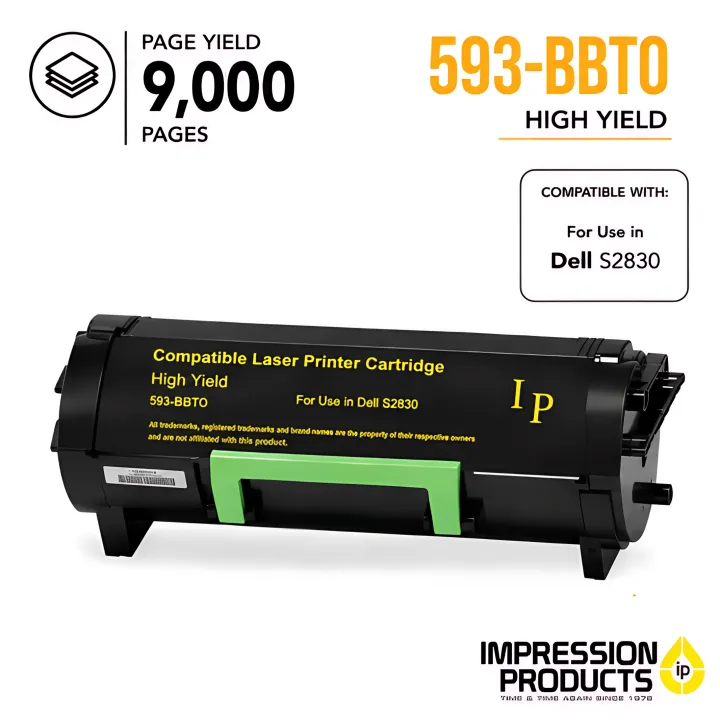
| Factor | Standard Toner | High-Yield Toner |
|---|---|---|
| Capacity | Lower toner volume, built for lighter or unpredictable printing | More toner packed in, built for higher declared page output |
| Upfront price | Lower purchase price | Higher purchase price |
| Cost per page | Often higher per page at steady volume | Often lower per page over time |
| Replacement frequency | More frequent reorders | Longer stretches between changes |
| Compatibility | Must match the exact printer model and part family | Same printer slot as standard, but always verify the part number |
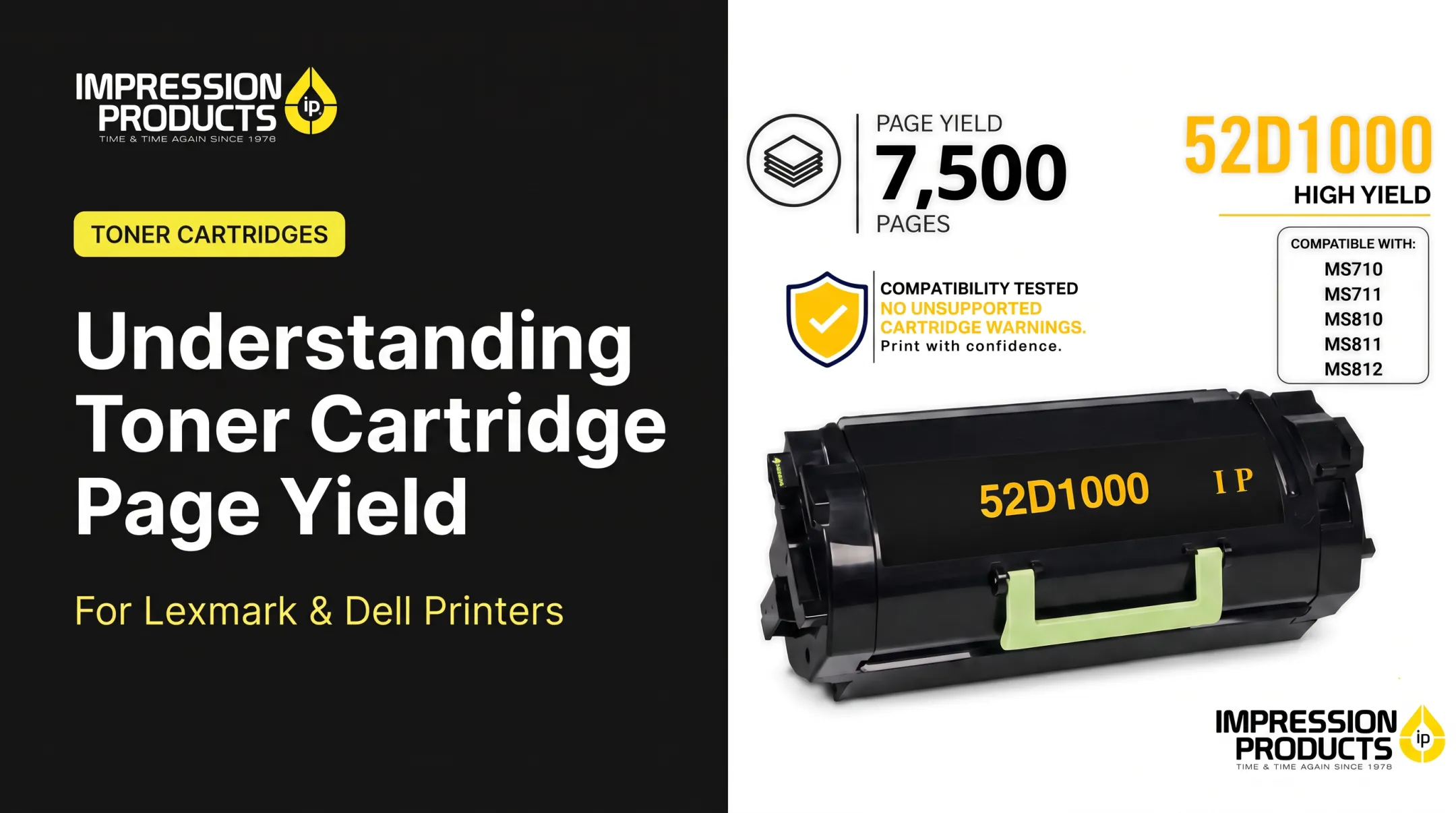
Impression Products' own catalog offers a good illustration of this gap. The Compatible Lexmark 52D1000 Standard Yield cartridge runs $50.00 for a 7,500-page declared yield, working out to roughly 0.67 cents per page. Its counterpart, the Compatible Lexmark 52D1H00 High Yield cartridge, costs $90.00 and is rated for 25,000 pages. That works out to about 0.36 cents per page — nearly half the cost, even though the sticker price is higher.
The gap widens again at the top of the range. The extra-high-yield Compatible Lexmark 52D1X00 is rated for up to 45,000 pages — six times the standard cartridge's declared yield, from the same printer slot.
There is a second lever stacked on top of the first. Across the range, compatible and remanufactured cartridges typically land 30–50% below OEM list price for an equivalent declared yield. Run both calculations before you order: pick the yield tier that matches your volume, then pick the supply source.

High-Yield Toner Cartridges vs. Standard Toner: Definitions, Differences, and Use Cases
What Does "Standard-Yield" Toner Mean?
"Standard" isn't a fixed page count. It's the lower-capacity option within a specific cartridge family. A standard cartridge for one printer might yield 3,000 pages, while a standard cartridge for a different model yields 7,500. The label only makes sense relative to its own high-yield sibling.
Standard toner tends to fit:
- Home offices with occasional printing needs
- Small offices unsure of monthly volume
- Buyers who don't want to pay upfront for capacity they may not use
The tradeoff: more frequent replacement, more time spent reordering, and a higher cost per page once printing becomes routine.
What Does "High-Yield" Toner Mean?
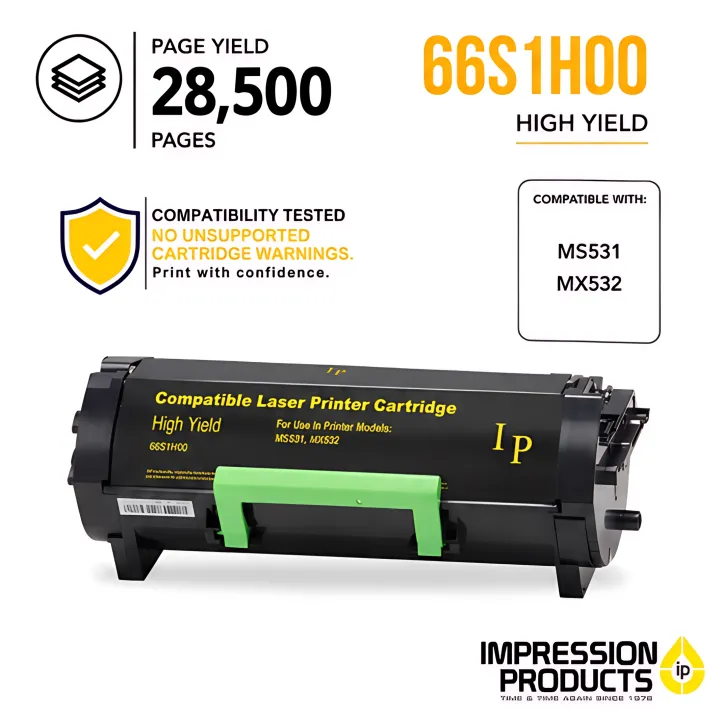
High-yield (sometimes labeled high-capacity or extended-yield) cartridges hold more toner and carry a higher declared page count than the standard version in the same family. Some printer lines go a step further with extra-high-yield cartridges. Impression Products' Compatible Lexmark 52D1X00, for example, is rated for up to 45,000 pages.
Impression Products can offer those cartridges because it won the right to. In Impression Products, Inc. v. Lexmark International, Inc. (2017), the U.S. Supreme Court held that a patent is exhausted the moment a cartridge is sold — so Lexmark cannot use patent law to stop anyone from refilling, remanufacturing, or reselling one. Chief Justice John Roberts wrote the opinion, and the Court was unanimous on U.S. sales. Impression Products fought that case for seven years, and the ruling now protects every business that buys aftermarket supplies. Read the full story of the case.
These aren't available for every printer model, so confirm the option exists for yours before you buy.
High-yield fits naturally in busy environments:
- Hotel front desks printing folios and receipts all shift
- Pharmacies churning out labels and patient paperwork
- Auto parts counters and dealership service departments printing invoices and work orders
- Multi-location office fleets running steady internal documents
How Are They Used in Practice?
Picture two users on the same printer model. One prints a few dozen pages a week: invoices here, a form there. The other prints hundreds of pages daily across multiple staff.
The occasional user rarely benefits from high-yield capacity sitting unused. The heavy user benefits from fewer interruptions and fewer emergency orders.
Yield choice also sits on a different medium than ink. Toner is a dry powder, not liquid ink, so concerns like ink drying in a printhead don't apply. What matters is cool, dry storage, keeping cartridges sealed until installed, and routine printer maintenance. Old toner doesn't dry out, but a neglected printer can still cause print-quality issues regardless of cartridge age.
Standard vs. High-Yield Toner: What Is Better for Your Printer?
Weigh These Factors First
Before ordering either version, look at:
- Average pages printed per month
- Typical document coverage (text-heavy vs. graphics-heavy)
- Current price and declared page yield for each option
- Available cash flow for the purchase
- Storage space for extra cartridges
- The hidden cost of your team stopping to reorder or troubleshoot
The Cost-Per-Page Formula
The math is simple:
Cartridge price ÷ declared page yield = cost per page
Multiply that by 1,000 for an easy comparison across cartridges, which helps when yields differ by thousands of pages. Keep in mind: tax, shipping, discounts, and real-world yield all shift the final number, so treat this as a planning tool, not a guarantee.
Actual vs. Declared Yield
Declared yields come from standardized testing, not your office's actual habits. ISO/IEC 19752:2025 governs monochrome toner yield testing, and a companion standard, ISO/IEC 19798:2025, covers color cartridge yield testing.
Manufacturers like Lexmark note that these tests run at roughly 5% page coverage under controlled settings. Real offices rarely match that exactly.

Actual output shifts with:
- Page coverage (text vs. images vs. dense graphics)
- Duplex printing settings
- Print density and quality settings
- Printer maintenance and cartridge age
When Each Option Makes Sense
Standard toner works better when:
- Printing is occasional or demand is unpredictable
- Budget for the initial purchase is tight
- A sale price makes the cost per page competitive anyway
High-yield toner works better when:
- Print volume is steady and moderate-to-high
- Multiple people share one printer
- Downtime or emergency ordering carries real operational cost
A Quick Buying Checklist
- Confirm your exact printer model and cartridge part number
- Compare standard and high-yield pricing using current listings, not memory
- Check the seller's return or satisfaction policy
- Ask whether the cartridge has undergone quality testing
- Consider whether compatible or remanufactured toner fits your budget and sustainability goals
Not sure whether your printer needs toner, an imaging unit, or a maintenance kit? Impression Products' support team can help match the correct part number to your model, whether you need a standard, high-yield, or extra-high-yield cartridge.
Real-World Printing Examples and Buying Scenarios
A U.S. grocery and pharmacy retailer offers a useful reference point. After adopting automated toner ordering across its locations, the retailer reached a 99% service level and reported $50,000 in savings during the first quarter, according to a Lexmark success story.
That figure covers the broader print-management rollout rather than a controlled test of standard versus high-yield cartridges. Still, it shows what high-volume environments gain when they stop managing toner reactively.
Compare that to a small office printing a few hundred pages a month. Here, standard toner often makes more sense: there's no operational upside to holding thousands of unused pages of capacity in a drawer.
For organizations managing several printers across locations, automatic monitoring earns its keep. Impression Products' remote toner inventory monitoring:
- Tracks toner levels in real time
- Forecasts when a cartridge will run low
- Ships a replacement automatically before shortages hit
It won't replace the standard-versus-high-yield decision, but it removes the guesswork from timing that choice.
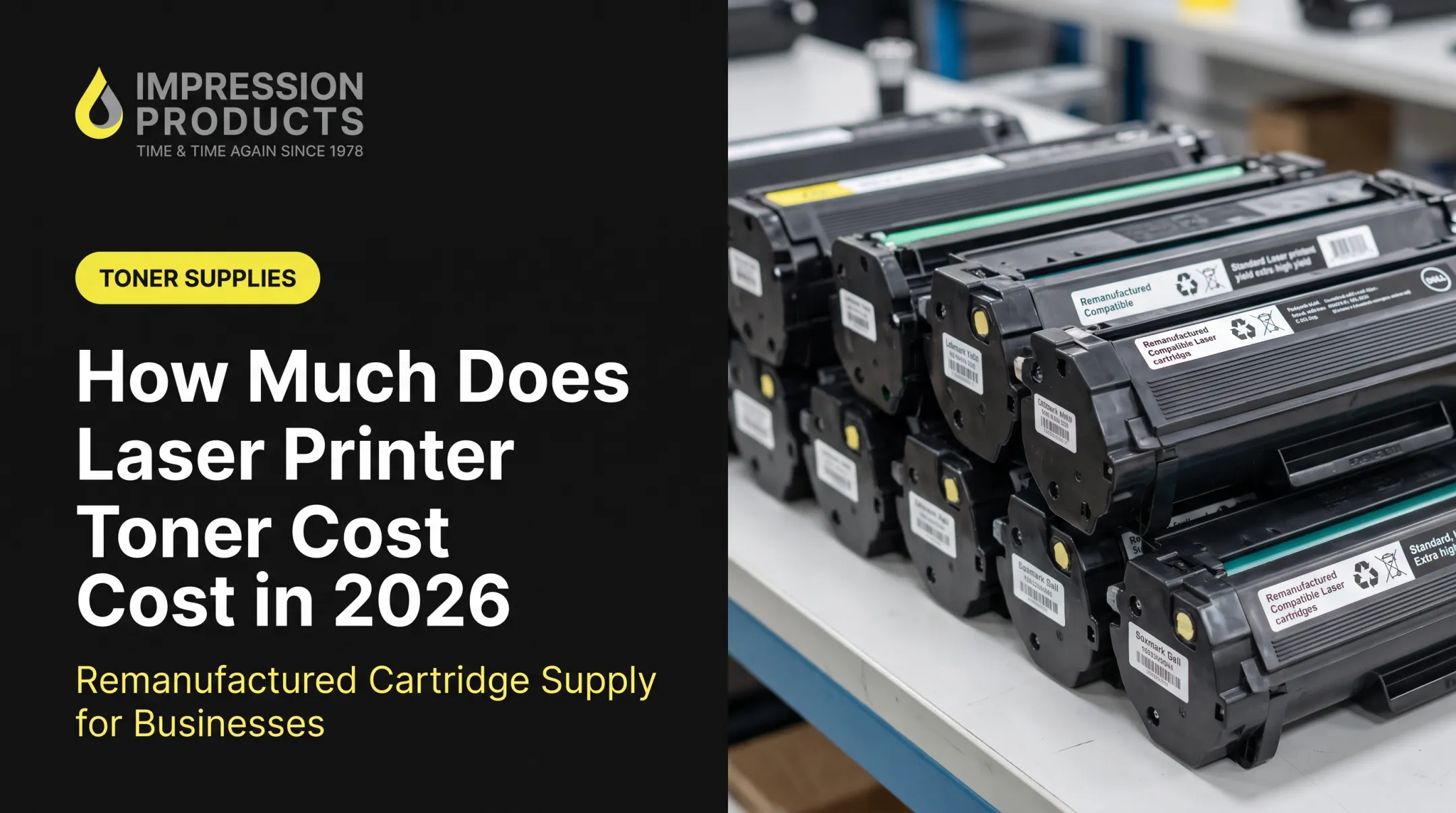
Compatible and remanufactured cartridges fit both scenarios when backed by real testing. Maryland's 2025 state toner procurement specification recognizes remanufactured cartridges that meet ASTM or STMC quality benchmarks and carry at least a one-year replacement warranty. That is a reasonable bar to expect from any supplier, not just government buyers.

Conclusion
Standard toner suits light, occasional, or unpredictable printing. High-yield toner suits steady, heavier volume, where the higher upfront price pays off through fewer replacements and a lower cost per page. The right answer depends on your exact cartridge family, current pricing, and honest volume expectations — not a blanket rule.
Before you order either one:
- Verify compatibility with your printer model
- Compare declared yield against price
- Factor in the time and disruption each cartridge change costs your team
That checklist cuts supply costs, reorder scrambles, and landfill waste. If you need help matching standard vs. high-yield options to a Lexmark fleet, Impression Products can walk through the numbers with you.
Frequently Asked Questions
What is the difference between standard and high-yield toner cartridges?
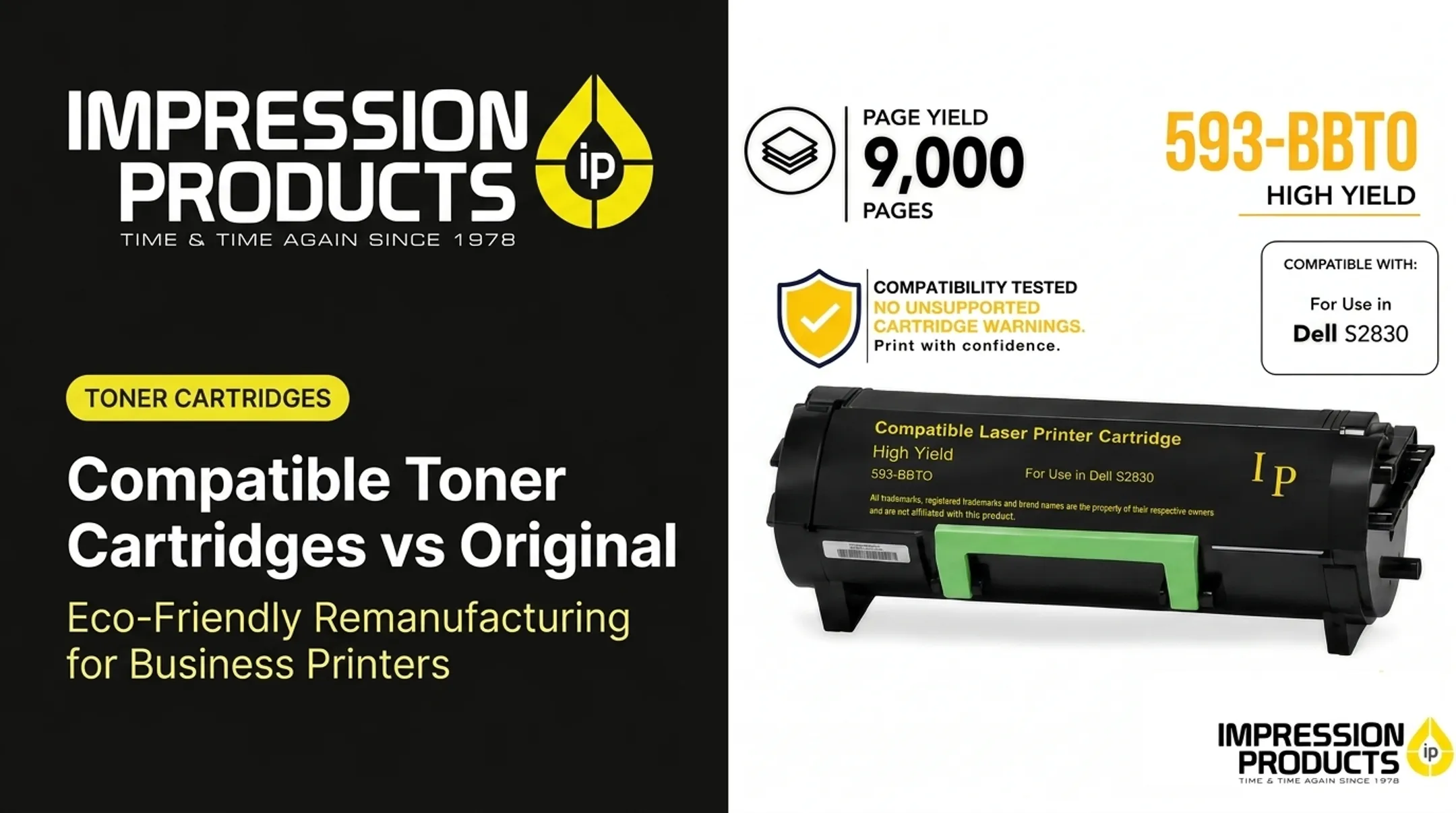
High-yield cartridges contain more toner and carry a higher declared page yield than the standard version in the same family. Standard cartridges usually cost less upfront but produce fewer pages.
Are high-yield toner cartridges worth it?
They're often worth it for consistent, higher-volume printing, since the cost per page tends to be lower. Compare current pricing and declared yield for your specific cartridge before deciding.
Is it worth buying genuine toner cartridges?
It depends on your requirements, not price alone. Genuine OEM, compatible, and remanufactured cartridges can all work well. Choose options backed by quality testing, dependable support, and a solid warranty or satisfaction guarantee.
What does "cartridge yield" mean?
Cartridge yield is the estimated number of pages a cartridge can print under a standardized testing method, typically around 5% page coverage. Actual output varies based on your documents and printer settings.
How is toner yield calculated?
Manufacturers test yield using standards like ISO/IEC 19752 for monochrome cartridges. As a buyer, you can calculate cost per page yourself by dividing the cartridge price by its declared page yield.